
Treasure Trails
Six clue tiers built from 461 hand-written steps across seven puzzle types.
Treasure Trails are CraftScape's puzzle chain for the Exploration skill. A clue scroll drops from almost anything you kill, gather or catch, and unsealing it starts a run of steps that send you across the map to dig, decode and slide your way to a reward casket. Six tiers, hundreds of hand-written steps, and gear that exists nowhere else.
Getting a scroll and keeping it
Almost anything you kill, gather or catch can produce a clue, and the tier follows the difficulty of what you did. Monsters under level 25 give beginner clues, level 25 and above easy, 45 and above medium, 60 and above hard, and 80 and above elite. Hunter creatures are read the same way. Gathering, fishing and pickpocketing use the level of the resource instead: level 15 and above can give easy, 35 medium, 50 hard and 70 elite. Master clues never drop from anything.
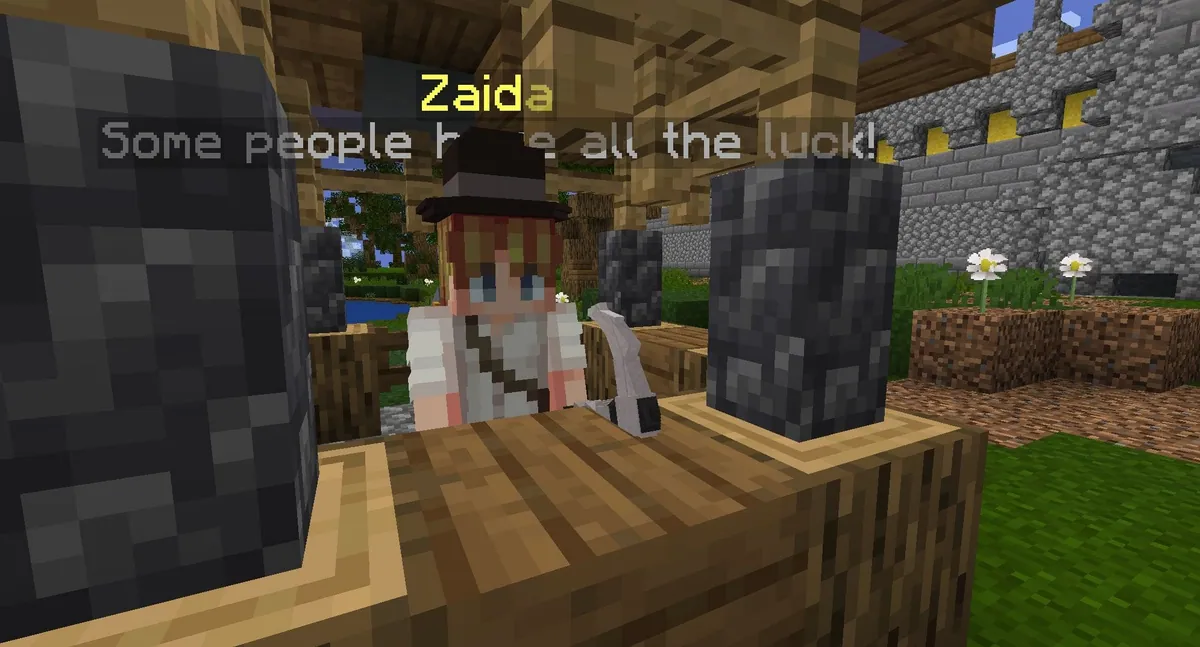
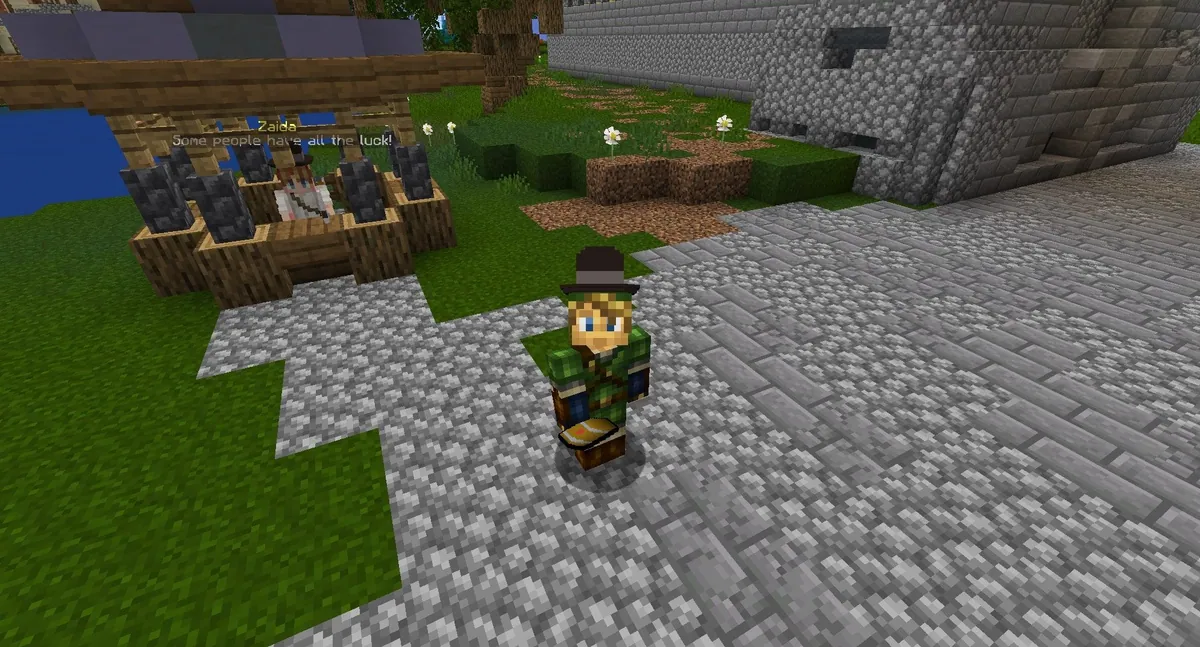
You may own only one scroll of each tier at a time, and your inventory, backpack and bank all count towards that. While you hold an easy clue, easy clues stop dropping for you, and one already lying on the ground is destroyed rather than picked up. The scroll pouch is the way around it: unstarted scrolls fall straight into the pouch, pouch contents do not count against the limit, and you withdraw one when you want to run it. Zaida sells easy through elite scrolls for points, and Watson trades four lower scrolls for a master.
Unsealing the scroll and running the trail
Click the scroll to unseal it. You need the Exploration level for that tier: 1, 15, 30, 40, 60 and 80 from beginner up to master. Unsealing rolls how long the trail will be and generates the first step, turning the scroll into that step's item, a book, a map or a device. Solve the step and the item becomes the next one. If it was not in your hand at the time, a message tells you to look in your inventory or bank for the updated scroll.
No puzzle type repeats inside a single trail, so a trail can never be longer than the number of types its tier can use. Beginner and easy draw on four types and run one to three steps. Medium uses five, hard six, elite five and master six, and those tiers roll longer trails that run up towards that cap. Solving the final step consumes the scroll and hands you a reward casket of that tier.
Two scrolls of the same tier in your possession jam the trail. You get a warning and nothing advances until you drop the spare, which is the single most common way to get stuck. A scroll above your Exploration level is not wasted, it simply refuses to unseal until you have the level. Clue scrolls and caskets go to your bank if you die, and /clues reports your completions per tier and your point total.
Riddles, maps and the strange device
Chest riddles describe a place in one line, such as "A path of gold leads to my royal spot." Carry the book, work out which chest it means, and click that chest. Any other chest simply reopens the book, so a wrong guess costs you nothing but the walk. There are 84 riddles in the pool and they turn up on every tier from beginner to master.
Map steps hand you a drawn picture of a patch of ground with no text at all. Recognise the location, then hold a spade and click the ground within a few blocks of the marked spot. The map itself only has to be somewhere in your inventory. General stores sell spades, and a trail gives you no warning that you will need one. There are 43 maps, covering beginner through elite, so a master trail never gives you one.
Hot and cold steps give you a strange device, and appear on beginner, easy and master trails only. Each click reports how warm you are, from a failed reading when you are far away up to "you should totally dig here", along with an approximate distance in blocks. Beginner and easy readings get more precise inside 100 blocks, while master readings stop counting past a point. The first reading is free, every later one costs health. When it tells you to dig, dig with a spade.
Anagrams and ciphers
Anagram steps print a scrambled name: "Rug Deter", "Lark In Dog", "Taunt Roof". Unscramble it, find that person and click them with the book in hand. Nothing else is required, the step resolves on contact. At 115 entries this is the largest pool in the system, and it runs on beginner, medium, hard, elite and master trails. Easy trails never use it.
Cipher steps do the same job through a shifted alphabet. The name is written with every letter moved along by the same amount, and the shift is generated fresh each time the step is created, so memorising an answer does not help. Work the offset out from a short word or a doubled letter, shift back, then present the book to that person. There are 30 ciphers, and they appear on medium and hard trails only.
Beacon routes and the two boxes
Beacon steps are a route, not a riddle. The book lists short codes in order, and its second page lists every code the trail can draw on. Click the beacons in that order with the book in hand. A wrong beacon resets you to the first code, and there is a fifteen second wait between clicks, so plan the run before you set off. Easy and medium ask for two beacons, hard and elite three, master four. Hard and below stay on the central mainland, while wilderness beacons only appear on elite and master routes.
Puzzle boxes are the sliding picture, four by four with one tile missing, always shuffled into an arrangement that can actually be solved. The finished picture sits beside the board for reference. Only tiles touching the gap will move and anything else is refused. They show up on hard, elite and master trails, and a puzzle skip ticket used on the scroll clears the step outright. A beacon skip ticket, by contrast, only advances you one beacon along the route.
Light boxes are master only. Six rows of six lights, eight buttons, and each button flips a fixed hidden set of lights. You win when all thirty-six are lit. Only the combination of pressed buttons matters, never the order, and pressing a button twice undoes it, so work through combinations methodically instead of jabbing. Your button state is saved when you close the window, and there is no skip ticket for this one.
Caskets, uniques and Treasure Trail points
Open a casket by clicking with it in hand. It rolls once per reward slot: one to three rolls on beginner, two to four on easy, three to five on medium, four to six on hard and elite, five to seven on master. Each roll checks the tier's special tables first and otherwise falls back to the everyday tables, which cover weapons and armour, runes and ammunition, food, coins, books, teleport scrolls and tablets. The items reach your inventory when you close the window.
The special tables are the reason to run trails at all. They hold trimmed and gold trimmed armour, heraldic and blessed shields and cosmetics you cannot buy anywhere. Gilded equipment and third age armour both start appearing at hard, and elite and master add the third age weapons, jewellery and tools. Master alone holds Orlando Smith's hat, its rarest entry. Worn on your head while you open a casket of easy or better, that hat can add a bonus casket one tier down.
Caskets are pre-rolled: a luck boost that was running when you finished the trail still counts when you open the casket much later. Own a reroll token for the tier and a button in the casket window spends it to roll the whole casket again. Medium, hard and elite caskets can also produce reroll tokens and skip tickets. Completions pay Treasure Trail points from easy upwards, one, two, four, eight and sixteen by tier, doubled on every tenth completion of that tier and multiplied harder at 50, 100, 250 and 500.
Every kind of clue, and how to solve it
One to three steps drawn from chest riddles, anagrams, maps and hot and cold. Pays 250 Exploration XP and a casket that rolls one to three times. The only tier that pays no Treasure Trail points.
One to three steps, and the tier where beacon routes begin. Anagrams and ciphers never appear on it. Pays 500 Exploration XP, a casket of two to four rolls, and 1 Treasure Trail point.
Up to five steps, and the tier where ciphers start. Pays 750 Exploration XP, a casket of three to five rolls, and 2 Treasure Trail points.
Up to six steps across six puzzle types, including the first puzzle boxes, the first gilded rewards and the first third age armour. Pays 1,000 Exploration XP, four to six casket rolls, and 4 points.
Five puzzle types, at most one of each: a chest riddle, an anagram, a map, a beacon route and a puzzle box. Pays 1,500 Exploration XP, four to six casket rolls, and 8 points.
Six puzzle types and the only tier with light boxes. Never dropped by anything: combine four lower scrolls at Watson, or take one from the first roll of an easy to elite casket while you hold none. Pays 3,500 Exploration XP, five to seven casket rolls, and 16 points.
Wanders with a spade and a suitcase. Hand him one easy, one medium, one hard and one elite scroll and he gives you a master clue. He refuses while you already own a master.
Runs the Treasure Trail Points shop. Scrolls cost 15 to 100 points by tier, reroll tokens 30 to 150, puzzle and beacon skip tickets 100 each, and the two scroll pouch upgrades 500 and 2,000. Scrolls and reroll tokens need the Exploration level of their tier, and the second pouch upgrade needs the first.
Holds unstarted scrolls only and swallows them automatically as they drop. Nine slots to begin with, 36 after the first upgrade, unlimited after the second. It can come out of caskets of medium and above if you do not own one yet.
The hot and cold tool. Each click reports a warmth band and an approximate distance in blocks. The first reading is free, every one after that costs health. Dig with a spade once it tells you to.