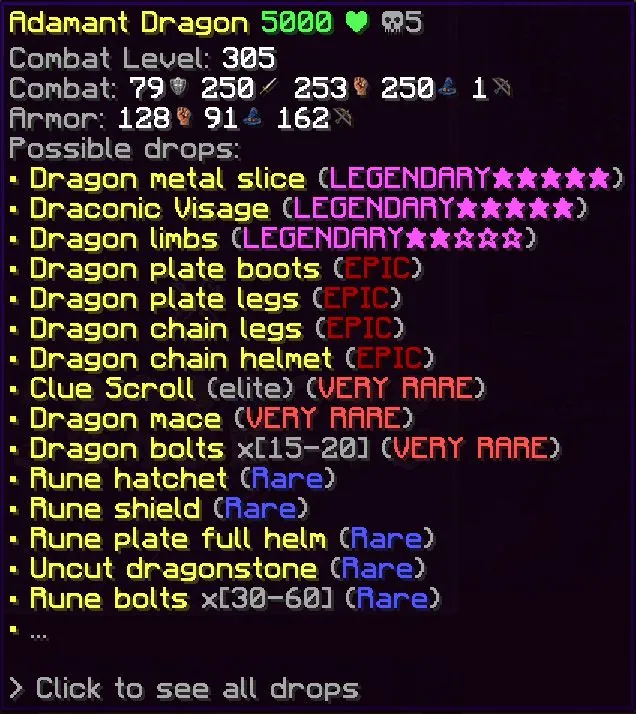
Boss Roster
36 monsters count as bosses, most of them with a purpose-built instanced lair and fight of their own.
CraftScape has thirty-six bosses. Nine appear only inside quests; the other twenty-seven run from Obor at level 60 up to the Corporeal Beast at level 785. Some wait in private lairs behind a gate you unlock, others stand in open ground where anyone nearby takes a share. This guide covers how you get in, what each fight demands, and how the drops are handed out.
Getting through the gate
Most bosses live behind a gate you click. The game asks whether you really want to go in, and if you accept it drops you into a private copy of the lair, with the boss spawning a moment later and a track starting up. Some gates want a key: a giant key for Obor, a mossy key for Bryophyta, and both are used up as you pass. The Kalphite Queen's gate instead checks that you are carrying a kalphite key and have level 55 Exploration, and leaves the key in your bag.
If you lead a party, the gate offers a second option: bring everyone with you. Only members standing close by come along, and ironman accounts are always left behind. At Obor and Bryophyta only the leader spends a key, but at the key-and-level lairs every member is checked for both. Each extra body adds a fifth of the boss's base health, so a group kills faster but not for free. If nobody can follow you, the fight does not start and your key is handed straight back.
The God Wars generals work differently. Their doors want forty kills against that god's followers, earned inside the dungeon, wiped whenever you leave or start a fight, and spent the moment you walk in. Bandos also asks for level 70 Strength, Armadyl for level 70 Ranged and Saradomin for level 70 Agility, while Zamorak wants only the kills. You then pick your own instance or the shared room, which tells you how many players are already inside. God Wars health never scales with party size.
Dying, leaving and starting over
An instanced fight ends one of three ways. You kill the boss and are teleported out, at once or after a few seconds depending on the fight. You leave the way you came, which is the surrender option: at most lairs that means clicking the door you entered by, and in the God Wars rooms it means sneak-clicking the altar. Or you die. Death during a party fight does not end things: you drop into spectator mode following a surviving team-mate until the last one falls, and your gravestone appears back at the entrance rather than somewhere unreachable inside.
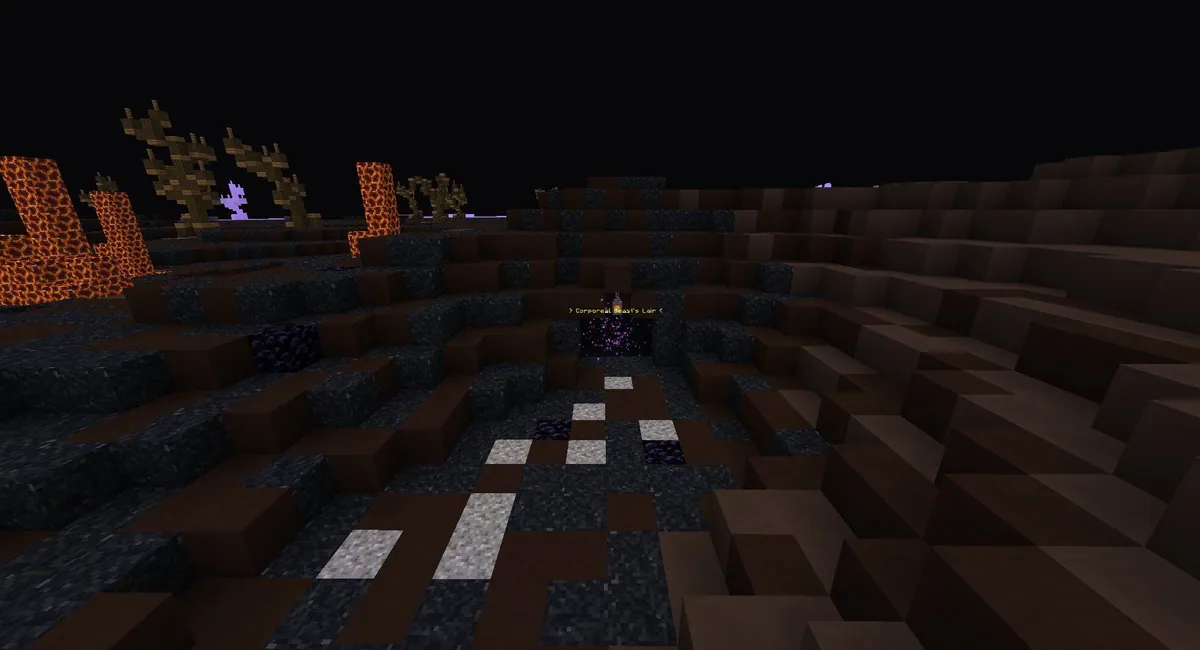
The party leader is the anchor. If the leader logs out the fight is interrupted for everybody, and surrendering only works while the leader is still alive. Open-ground bosses have no instance to reset. The Corporeal Beast's cave does have a gate, but it will not open until roughly ten seconds have passed since your last exchange with the beast, and the beast heals steadily whenever the cave is empty, so an abandoned attempt is simply wasted.
Venenatis, Scorpia and the Chaos Elemental
Venenatis sits in the level 30 wilderness in multi-combat, attacking mostly with magic and the occasional ranged shot. Now and then she lands a stun that blinds you briefly, and whether you are praying against magic at that moment decides whether it is an inconvenience or the end of the trip: unprotected, that hit is enormous. She is only level 110 but carries a very deep health pool, so you are committing to a long fight with your back exposed to other players.
Scorpia is deeper in, in the level 60 wilderness, and is a straight melee fight with the largest health bar of the three. Once she drops below a tenth of her health she starts calling guardians to her side, which makes the closing stretch the dangerous part rather than the opening. She is the source of the dragon scimitar, along with extreme prayer potions and a phoenix necklace.
The Chaos Elemental shares that level 60 stretch and is the strangest fight in the game. It is only level 90, but its attacks are mostly magic with ranged and melee mixed in unpredictably, and two specials rotate in on top: one scrambles the order of your hotbar mid-fight, the other flings you bodily across the ground. Bring a layout you can rebuild without thinking about it.
How boss loot is handed out
Boss drops are not first to hit or last to hit. When the boss dies the game gathers everyone who damaged it and is still connected and nearby, rolls each item on the table separately, and awards it to one of those players with the odds weighted by how much damage they did. Everybody else gets a message naming who received it. Wander off or log out before the kill lands and you are not in the draw at all.
Many bosses also drop their own soul, and at the big instanced fights that is close to a guaranteed drop. Souls are spent with the soul shop trader, who sells the unique items of the bosses he covers at a fixed price per item, higher the rarer the drop. Not every soul has something behind it, but where it does, it turns a punishing dry streak into a payout you can work towards. Nineteen bosses also drop a rare pet token, and nine of those can currently be exchanged for the pet itself, at a price that depends on your rank.
Kill times are recorded per boss and kept separately for solo and group kills. Beat your previous best and the game announces the new record on the spot, otherwise it simply tells you how long the fight took. It is the plainest way to tell whether a gear or prayer change actually helped.
The boss collection log
Type /collectionlog, or /log, to open it. The boss tab gives every non-quest boss its own page, listing the unique items that boss can hand you and counting how many of each you have collected. The nine bosses that only appear inside quests are left out. Barrows equipment pulled from the crypt chest and the fire cape from the Fight Caves both register here as well, even though neither arrives as an ordinary monster drop.
Every first-time entry pays Exploration experience and pops a toast, so filling the log feeds a skill as well as your bank. Items you have never seen are still listed, just unlit, which makes the log the honest reference for what a boss can actually give you, and worth reading before you plan a trip around a rumour.
Boss slayer tasks
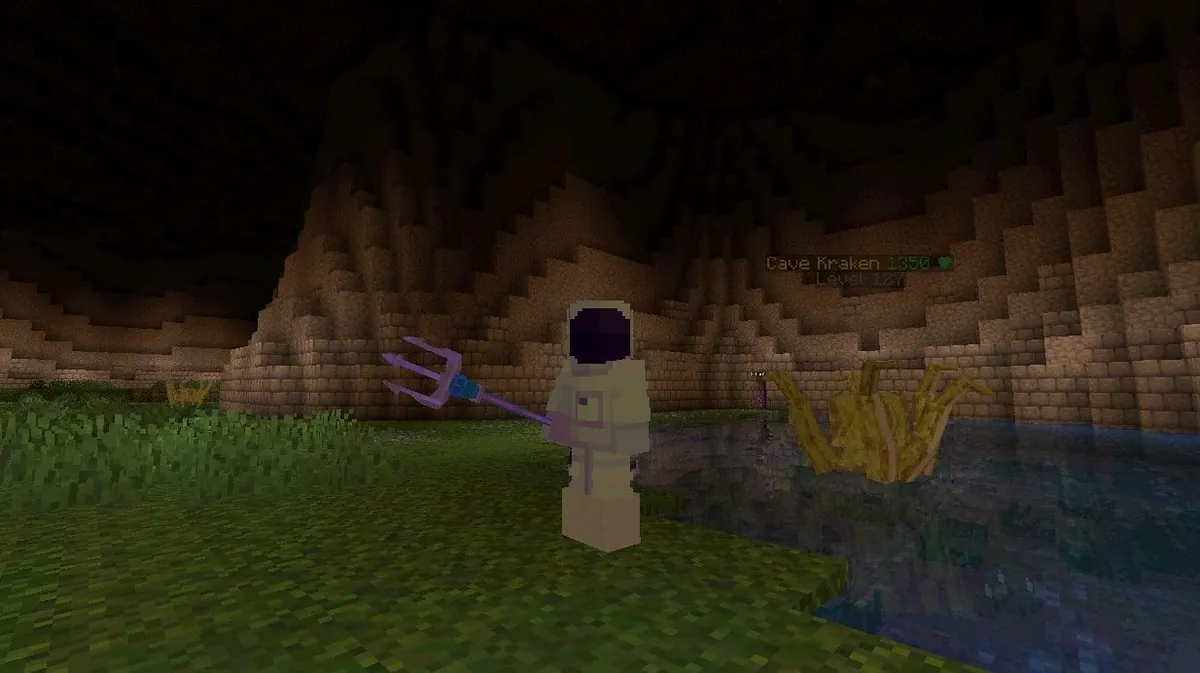
Sumona hands out boss tasks, but only once you have bought the boss slayer unlock from the ordinary slayer reward shop. Fifteen bosses are on her list: the Giant Mole, Dad, Dagannoth Rex, the Evil Chicken, Ahrim, the Kalphite Queen, King Black Dragon, Obor, the Creature, Bryophyta, the Kraken and all four God Wars generals. What she is allowed to offer is bounded by your combat level through five tiers, each mapping your level onto a band of boss levels, so a low-level account is only pointed at the weaker end of the roster.
She shows three offers at a time, never the same boss twice, and you can take three boss tasks in an hour. Completing one pays boss slayer points instead of ordinary slayer points, and those points are the only way to buy the imbued Fremennik rings, which need the plain ring first, plus a dragontooth necklace, holy sandals, a rune pouch upgrade and a slayer helmet upgrade.
The roster
The entry-level boss, opened with a giant key from hill giants. He fights in melee, but backing away is punished: he rears up and fires a ranged special down a line of churned ground. Drops the hill giant club, and enormous bones on every kill.
Opened with a mossy key from moss giants. She uses melee when you are in reach and mixes magic in at range, so there is no safe distance. Drops her staff and generous stacks of high-tier runes.
Fought in an open cave rather than an instance, with an enormous health pool for its level. It burrows out mole minions as it fights, capped at five at once, and they are cleared when it dies. You are teleported out of the cave a few seconds after the kill.
Three kings at once, and only the currently active one can be damaged until a king is down to its last tenth of health. All three must die to finish. Rex takes only magic, Prime only ranged, Supreme only melee. Coloured circles on the floor override your combat style or your combat buffers and add damage; they relocate periodically, their labels scramble at intervals, and straying too far from the centre brings the ceiling down on you.
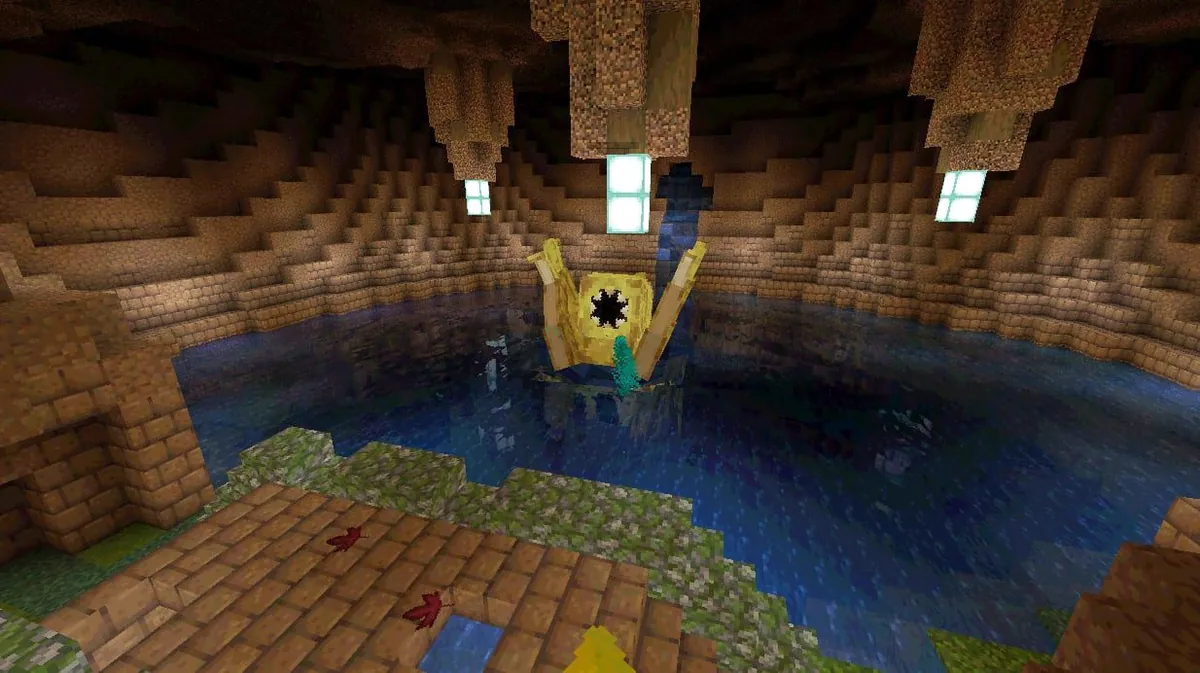
Stationary, so it never chases, and it attacks purely with magic including an occasional hit for triple damage. Protect from Magic is deliberately weakened against it. Its thinnest armour is against magic, and it holds the trident.
Two phases with a hard rule between them. On the ground, anything but melee is capped to a trickle. At half health she goes invulnerable for ten seconds, transforms into her airborne form, and from then on melee is the style that gets capped instead. She spawns kalphite minions in both phases, more often once airborne.
Alternates between dragonfire and melee, announcing each switch with a growl. Two breath specials sweep the ground around him: one blinds, slows and confuses, the other chills you nearly to a standstill. Protect from Magic does not fully hold against his dragonfire. PvP is switched off inside the lair even though the entrance sits in the wilderness.
Kree'arra, Commander Zilyana, General Graardor and K'ril Tsutsaroth, each behind forty kills on their own followers. You choose your own instance or a shared room. Their health does not scale with party size, which is the game telling you to bring friends. Sneak-click the altar to leave, and the room resets thirty seconds after a kill.
The highest-level boss in the game. Magic does nothing to it, anything that is not a spear does a small fraction of its damage, and attacking from outside the cave proper is ignored entirely. Heavy hits and low health can make it summon a dark energy core that drains your health and feeds it back to the beast. It respawns thirty seconds after dying and heals up whenever the cave is empty. PvP is off inside the cave.
The last thing standing after sixty-three waves of the Fight Caves, a solo ranged-focused gauntlet with no party option. Hardcore accounts lose their status simply by entering. The fire cape earned at the end registers in the boss collection log.
What it looks like